Article: How to Verify Perfume Batches Before You Buy
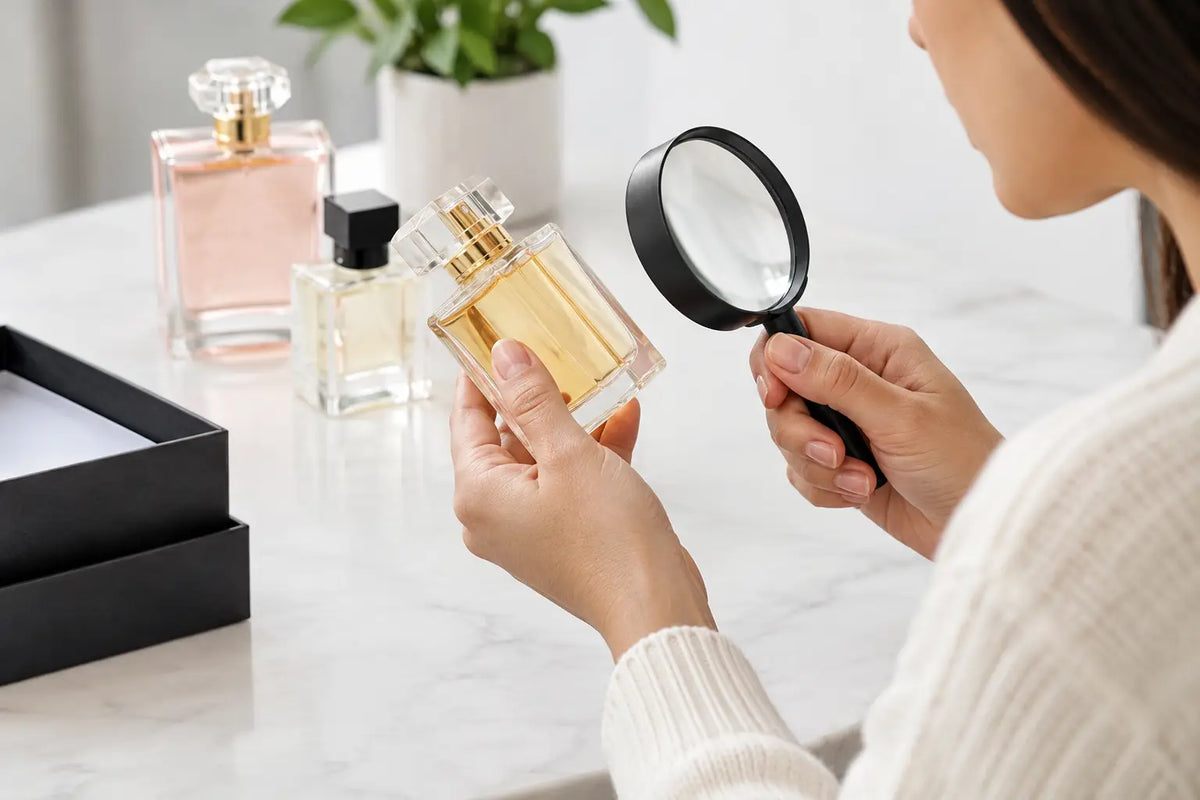
How to Verify Perfume Batches Before You Buy
A tiny string of letters and numbers on a fragrance box can prompt a surprisingly big question: is this perfume genuine, fresh and worth keeping? Learning how to verify perfume batches is useful, but the batch code is only one piece of the picture. It can indicate when a product was made. It cannot, by itself, certify authenticity.
For prestige fragrance, confidence should begin before the parcel arrives. A clear retailer, a credible source of supply and professional presentation are far more meaningful than a code entered into a website after purchase. Use the batch number as a sensible cross-check, not a single test that has to carry the entire decision.
What a perfume batch code actually tells you
A batch code, sometimes called a lot code, is a short production reference applied by the manufacturer. You will usually find it printed, stamped or laser-etched on the base of the bottle and on the outer carton. It helps brands identify a particular production run for quality control, stock rotation and, where necessary, product recalls.
The format varies widely. One house may use three characters, another six. Some codes combine letters and digits; others look like a simple number. There is no universal perfume batch-code system, so a code that looks unfamiliar is not automatically a warning sign.
Many online batch-code checkers attempt to turn that reference into an estimated production date. They can be helpful for context, particularly when comparing the code on a bottle with the code on its box. However, they are independent databases, not a definitive brand-authentication service. Brand coding systems change, regional production can differ, and an older code may be read incorrectly.
A result that suggests a fragrance was produced a few years ago does not mean it is spoiled. Designer perfumes often remain in excellent condition when sealed and stored correctly. It does mean you should consider the whole purchase - the seller, the price, the condition of the packaging and how the item has been kept.
How to verify perfume batches sensibly
Start by locating the code in both expected places. On a boxed fragrance, check the base or lower side of the carton, then the underside of the bottle. The codes should normally match exactly. A mismatch deserves a closer look, especially if the carton and bottle appear to be from different product versions.
Look at how the code has been applied rather than judging it by whether it is perfectly pretty. On genuine stock, it may be inkjet printed, embossed, etched or stamped, depending on the brand and packaging. It should be legible and look integrated with the packaging rather than added as an afterthought. That said, printing can vary between factories and production years, so one slightly imperfect mark is not proof of a fake.
If you use a batch-code date checker, treat its answer as an estimate. Does the date make sense for the packaging design, the release period and the retailer’s stated stock? A recent production date is reassuring, but it is not the only desirable outcome. Collectors may actively seek an earlier formulation, while gift buyers may simply want a fresh, current presentation.
The stronger check is consistency. The bottle, cap, atomiser, label, box artwork, ingredients panel and batch information should all feel like parts of one professionally made product. Counterfeits frequently rely on small inconsistencies: blurred text, incorrect spacing, flimsy cellophane, poorly fitted caps or a scent that changes dramatically within minutes.
Why a matching code is not an authenticity guarantee
It is tempting to think a matching batch code settles the question. Unfortunately, counterfeiters can copy genuine codes from real products, and a fake box can carry a plausible-looking number. Equally, genuine items may have minor differences due to a packaging refresh, a change in bottle mould or manufacture for different markets.
This is why provenance matters more than a single inspection point. Ask where the retailer obtained its stock, whether it can stand behind its supply chain, and whether it provides clear company information, customer support and a fair returns process. Vague marketplace listings, stock photographs only, no meaningful seller details and prices that seem too good to be true all create avoidable uncertainty.
At BeautyBurst, genuine products are sourced through trusted accredited distributors, with documented provenance and full product traceability. That standard offers more useful reassurance than asking a batch code to do a job it was never designed to do.
Freshness is about storage as well as age
A perfume’s production date is not its expiry date. Most fragrances are formulated to remain stable for years when unopened and stored well. Heat, direct sunlight and repeated temperature swings are more likely to affect a fragrance than a sensible period on a retailer’s shelf.
Keep sealed and opened bottles in a cool, dry cupboard away from a radiator, sunny windowsill and steamy bathroom. The original box provides useful protection from light, particularly for clear glass bottles and lighter citrus, floral or aquatic compositions. A dark wardrobe or drawer is usually a better home than a display ledge in full sun.
Once opened, air enters the bottle with each spray. This does not mean the fragrance suddenly turns, but it can gradually alter more delicate top notes over a long period. If you own several bottles, rotate them and keep the cap in place. For a favourite you wear often, enjoy it rather than saving every drop for a mythical perfect occasion.
Packaging changes can be genuine
Fragrance houses update their packaging more often than many shoppers realise. A logo may become smaller, a bottle base may be reworked, an ingredient list may change to reflect regulations, or the atomiser may be replaced by a newer component. These changes can make side-by-side online comparisons confusing.
Before assuming a difference is suspicious, check whether you are comparing the same concentration and size. Eau de Toilette, Eau de Parfum, Parfum and refill formats can use different bottle details. A 30ml bottle may not have the same base label or cap construction as a 100ml version. Limited editions and travel sprays introduce further variation.
The fragrance itself can also evolve. Reformulation, natural-material variation and ageing can subtly affect colour or the opening notes. A paler juice, for example, is not automatically a problem. What matters is whether the product is professionally presented, smells coherent from opening to dry-down, and comes from a retailer prepared to account for its stock.
A practical check when your fragrance arrives
When your order is delivered, inspect it calmly before discarding the outer packaging. Confirm that the product name, concentration and size match what you ordered. Check that the bottle and carton batch codes correspond, then look for clean printing, secure seals and a cap that sits properly.
If it is your first time wearing the fragrance, test one spray on skin or a blotter and give it time. The first seconds can be alcohol-forward, particularly after transit or if the bottle has been cold. The heart and dry-down tell you much more about the composition than the opening alone.
Should anything genuinely concern you, photograph the carton, bottle base and packaging before using the item further. Contact the retailer promptly with the order details and a clear description of the issue. A trustworthy seller should take legitimate questions seriously and explain the next step without evasive language.
When batch checking is most useful
Batch checking is especially worthwhile when you are buying a discontinued fragrance, comparing bottles from different years, receiving a gift with no purchase history, or assessing a bottle bought through a private resale. In these cases, it can help establish a likely timeline and reveal whether the box and bottle belong together.
For a new purchase from a reputable UK retailer, the batch code is best viewed as an extra layer of reassurance. You should not need to become a packaging detective to buy a bottle of Dior, Tom Ford, Creed or Jo Malone with confidence. Transparent supply, careful fulfilment and a retailer that values traceability do the essential work first.
A fragrance should feel like a pleasure from the first spray, not a puzzle you are left to solve alone. Check the batch code, trust the evidence around it, and choose sellers whose standards make confidence part of the purchase.

