How to Choose Foundation Shade With Confidence
A foundation can look beautiful on the back of your hand, then appear too warm, too pale or strangely grey once it reaches your face. Knowing how to choose foundation shade comes down to more than matching light, medium or deep. Your skin depth, undertone, preferred coverage and the lighting around you all play a part.
The right match should make skin look like skin - fresher, more even and still recognisably yours. It should blend into your jawline without a visible edge, rather than creating a mask-like contrast with your neck or chest.
Start with your skin depth
Skin depth is the overall lightness or depth of your complexion. Most prestige foundation ranges group shades into fair, light, medium, tan and deep families, sometimes with more detailed labels such as light-medium or medium-deep. This is a useful starting point, but it is only the first filter.
Look at your face and neck in natural daylight, ideally near a window. Avoid judging your shade under warm bathroom bulbs or in the yellow-toned lighting common in changing rooms. If your face is naturally a little more pigmented than your neck, as it often is, aim for the point where the two meet: the jawline and upper neck.
A foundation that is too light can look chalky, particularly in photographs or around the perimeter of the face. One that is too deep can appear orange or dull, even when the formula itself is excellent. The goal is not to brighten your complexion with foundation. Use concealer, blush and bronzer for dimension instead.
How to choose foundation shade by undertone
Undertone is the subtle colour beneath the surface of your skin. It does not change dramatically when you tan, and it is often the reason two foundations at the same depth look completely different on you.
Most ranges use three broad undertone groups: cool, warm and neutral. Cool undertones tend to lean pink, rosy or blue. Warm undertones lean golden, peachy or yellow. Neutral undertones sit between the two and may suit shades described as neutral, beige or balanced. Some complexions also have an olive undertone, which can appear green-gold, muted or slightly grey beside foundations that are overly pink or yellow.
Vein colour and jewellery preferences can offer clues, but they are not decisive tests. Blue-looking veins do not automatically mean a cool undertone, and liking gold jewellery does not guarantee a warm one. Instead, observe what happens when you wear foundation. Does a pink-toned shade make you look flushed? Does a golden shade turn orange? Do many supposedly neutral shades look peachy? Those reactions are more useful than a single rule.
If you find that foundations often look too orange, consider a neutral, olive or cool-leaning option. If shades regularly appear pink or ashy, a warmer golden undertone may be a better fit. Deep complexions especially benefit from checking that the formula has enough warmth, richness or red-golden balance to avoid a grey cast.
Read shade names carefully, but do not rely on them alone
Letters and labels vary by brand. A “C” may mean cool in one range, while another brand uses it for a particular depth family. “Warm” can refer to golden yellow in one formula and peach in another. Product swatches, model imagery and clear shade descriptions are helpful, but each brand creates its own system.
Where possible, compare a shade you already wear successfully with the new brand’s shade chart. Note both its depth and undertone. For example, if your reliable foundation is medium with a neutral-olive base, start there rather than choosing medium warm simply because it sounds close.
Test on the jawline, not your hand
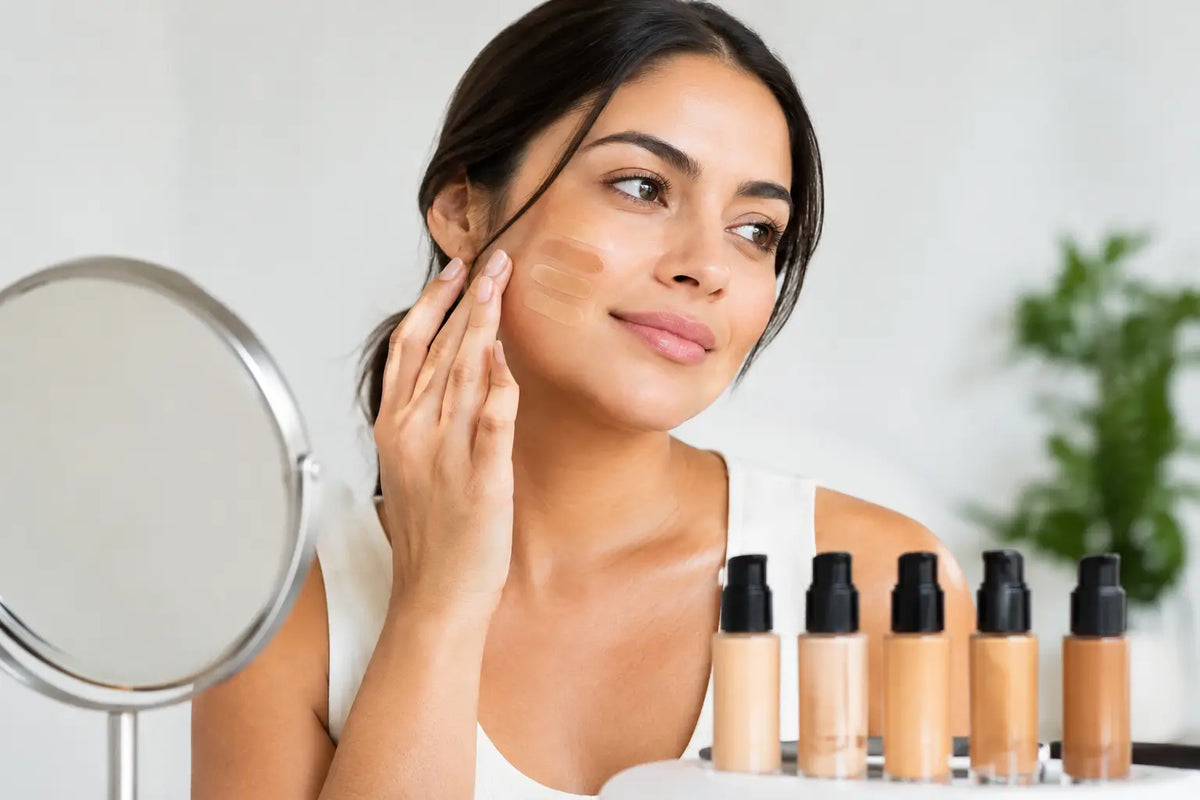
The hand is convenient but rarely matches the face. It can be lighter, more tanned, redder or more exposed to the elements. Apply two or three promising shades as narrow stripes from the lower cheek across the jaw and slightly down the neck.
Give them a moment to settle, then look in daylight. The best shade should seem to disappear. If you can immediately see a pink, yellow, orange or pale stripe, eliminate it. Testing several close options is more revealing than trying one shade and hoping it works.
If you are visiting a counter, wear little or no base makeup so you can see the result clearly. Ask for samples where available and wear the likely match for a few hours. This matters particularly with long-wear or fuller-coverage formulas, which can shift slightly as they dry down and mix with your natural oils.
Allow for oxidation and formula finish
Oxidation is when foundation becomes a little deeper, warmer or more orange after application. Not every formula oxidises noticeably, and the amount depends on the formula, your skincare and your skin type. Still, it is worth allowing ten to fifteen minutes before deciding.
A dewy foundation may look slightly lighter at first because light reflects from the finish. A soft-matte or matte formula can look more opaque and therefore appear deeper once built up. This does not mean you should choose a deliberately wrong shade. It means you should judge the foundation once it has settled in the way you will actually wear it.
Your skincare can affect the result too. Rich creams, facial oils and high-SPF products may change how a base sits or wears. Test foundation over your usual daytime routine, not on bare skin if that is not how you normally apply it.
Match your coverage to how you use foundation
Sheer and skin-tint formulas are forgiving because your natural complexion remains visible. You may comfortably wear a shade that is very slightly warmer or deeper, particularly in summer. Medium and full-coverage foundations are less forgiving because they lay down more pigment, making undertone accuracy essential.
Consider where you want the coverage. If you apply a light base all over and conceal only where needed, a close flexible match may be enough. If you prefer a perfected, full-face finish for evenings, events or photographs, spend more time testing the jawline in daylight. Flash photography can exaggerate a poor match, especially if the foundation has a noticeably pale or grey cast.
Choosing foundation online without guessing
Buying foundation online is entirely possible, but it rewards a more methodical approach. Start with a shade you own, ideally one you have worn across different lighting and still trust. Search the new range for its official depth and undertone equivalents, then check several swatches rather than relying on one polished campaign image.
Screens can distort colour, and a swatch against a white background may look different from the same shade on a model. Look for images of the shade worn on complexions close to yours, while remembering that camera settings and editing can still affect the result. Brand shade finders are useful guides, not guarantees.
It also helps to account for the season. If you tan easily, you may need a slightly deeper shade for late spring and summer, then return to your usual match in autumn and winter. Many makeup wearers keep two adjacent shades and adjust the balance between them rather than forcing one bottle to work all year.
When investing in premium makeup, buy from a retailer that clearly presents genuine stock and trustworthy product information. A reliable shade name, full product details and confidence in authenticity make it easier to reorder when you find a foundation that truly works for you.
Common shade-match mistakes
The most common mistake is choosing a foundation to make the skin look tanned. This often leaves a darker line around the jaw and makes blending more difficult. Choose the shade that matches your skin, then add warmth with bronzer where the sun would naturally hit.
Another is overcorrecting redness with an overly yellow foundation. Redness is usually localised, while your undertone runs through the whole complexion. Match your overall undertone first, then use targeted colour correction or concealer where needed.
Finally, do not judge a match from a tiny dot on the cheek. Blend enough product to see its real opacity and finish. A shade can seem promising in a small patch yet look completely different once applied across the face.
The best foundation shade is the one that lets the rest of your makeup look intentional: your concealer brightens, your bronzer adds warmth and your skin still looks like yours. Take a little extra time at the start, keep a note of the shades that work, and future makeup shopping becomes far more confident.