Article: How to Find Your Fenty Beauty Foundation Shades
How to Find Your Fenty Beauty Foundation Shades
A foundation can look flawless under the bathroom light, then feel distinctly wrong by lunchtime. The difference is rarely just the shade depth. With Fenty Beauty foundation shades, undertone, formula and your skin’s natural changes through the year all play a part in finding a base that genuinely looks like skin.
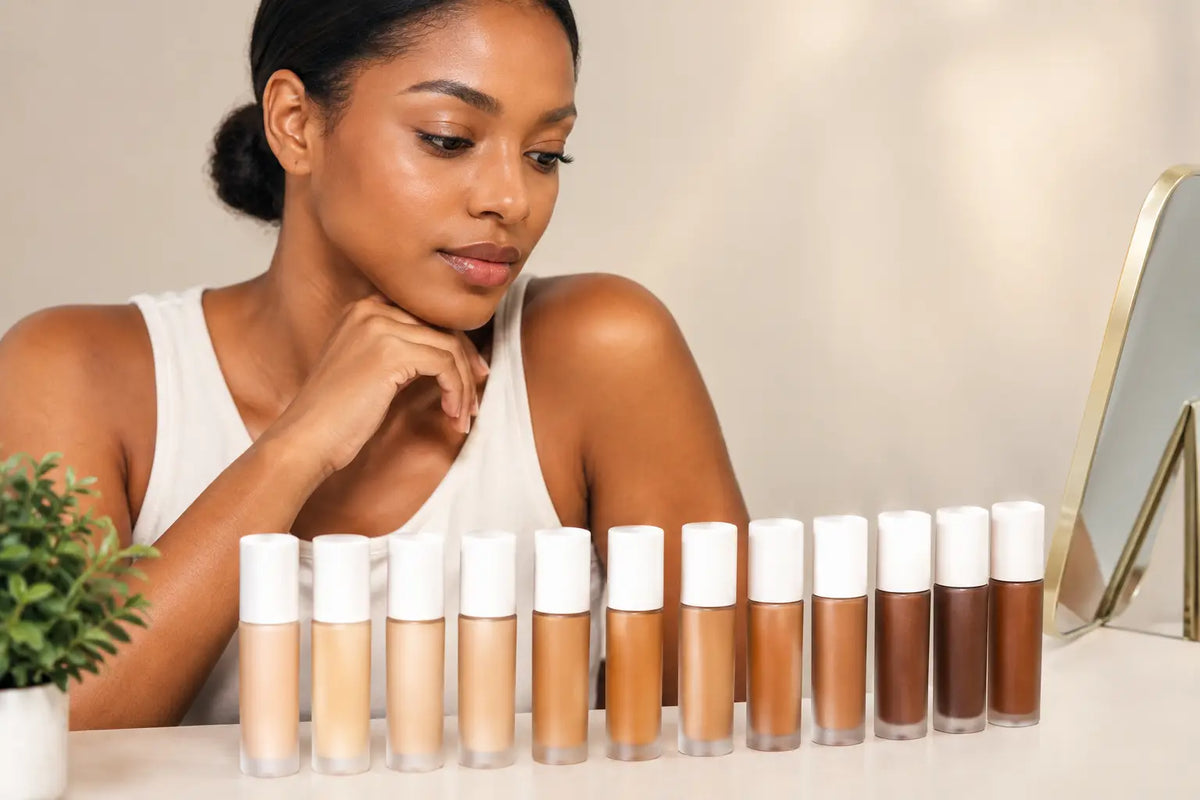
Fenty Beauty made shade inclusivity a defining part of its complexion offering, but a broad range also means there is more to consider than choosing the nearest-looking swatch. A considered match is worth the effort: it helps your concealer, bronzer and blusher sit more naturally, and gives even a minimal makeup look a polished finish.
Choosing Fenty Beauty foundation shades by undertone
Start with undertone, not whether your complexion appears fair, medium or deep. Your undertone is the consistent hue beneath the surface of your skin, whereas surface tone can change with sun exposure, redness, dullness or a recent breakout.
Cool undertones tend to lean pink, rosy or bluish. Warm undertones often show more golden, yellow or peachy notes. Neutral undertones sit between the two, with a balance that does not read obviously pink or golden. Olive undertones are especially worth identifying, as skin can appear golden at first glance while carrying a subtle green-grey cast that many conventional warm foundations do not accommodate well.
Look at your bare skin in indirect daylight beside a window. Avoid judging it immediately after cleansing, exercising or applying skincare, when temporary redness can lead you towards a shade that is too pink. It can also help to compare your face with your neck and upper chest. The aim is not to brighten your face dramatically, but to create continuity from face to body.
If you are deciding between two undertones, neutral is often the more forgiving starting point. A foundation that is slightly too warm can turn orange against the neck, while one that is too cool may look ashy or noticeably pink. That said, the right choice depends on your individual skin rather than a label alone. A warm complexion with visible redness, for example, may still need a warm or olive-leaning base rather than a cool shade chosen to counteract the redness.
Match the formula before committing to a shade
A name and shade number do not always translate identically across every Fenty Beauty complexion product. Pro Filt'r Soft Matte Longwear Foundation, for instance, is designed for a soft-matte, buildable finish and offers a particularly extensive shade selection. Its matte effect can be a strong choice for combination or oily skin, or for anyone who wants a refined, shine-controlled look that wears well through a long day.
For drier skin, the same shade may appear deeper or more textured if the skin has not been prepared properly. A nourishing moisturiser and suitable primer can make a major difference, but it is sensible to choose the finish as carefully as the colour. A matte foundation is not automatically unsuitable for dry skin, nor is a dewier formula always ideal for oilier skin. The better question is how you want your complexion to look and feel after several hours of wear.
Fenty Beauty’s lighter complexion options, such as skin tints, generally provide a more relaxed level of coverage. They can be excellent for weekday makeup, warm weather and those who prefer freckles or natural variation to show through. Bear in mind that a sheer formula is more flexible, but it does not remove the need for an undertone match. A tint that is too golden will still look golden.
Why shades can look different once applied
Foundation does not stay exactly as it appears when first dispensed. Your natural oils, skincare, SPF and the formula itself can all affect the final appearance. Some foundations deepen slightly as they dry, a process often called oxidation. This is why a swatch judged after ten seconds can be misleading.
Apply a small amount in two or three close shades across the jawline, extending each stripe slightly towards the neck. Leave it for at least ten minutes before deciding. The best match will seem to fade into your skin rather than sitting on top of it. Test in daylight as well as indoor lighting, particularly if you spend much of your day outside or under office lights.
Do not use the back of your hand as the final test. Hands are regularly exposed to sun, washing and temperature changes, so their colour is often different from the face and neck. The jawline remains the most useful place to assess whether the foundation creates a believable transition.
A practical way to narrow your Fenty Beauty shade
If you already wear a foundation you like, use it as a reference point, but do not treat it as a guaranteed conversion. Brands describe undertones differently, and coverage can alter how depth is perceived. A medium neutral shade in one formula may not look equivalent to a medium neutral shade in another.
Begin by identifying your approximate depth category, then compare only the nearest undertone options. This avoids the common mistake of choosing a foundation that is the right depth but the wrong cast. If your current base pulls peachy, orange or pink, that is useful evidence that your next choice needs a different undertone rather than simply a lighter or darker number.
When shopping online, consult brand swatches but treat them as a guide, not a final verdict. Screen brightness, image editing and individual monitors can shift colour. Swatches shown across several skin tones and in daylight-style photography tend to be more useful than a single product image. If you can, compare the listed undertone description with a shade you have worn successfully before.
For a prestige foundation purchase, product provenance matters as much as the match. Buying genuine goods from a trusted, traceable supply chain protects the performance and wear experience you expect from the formula. BeautyBurst sources its premium beauty range through trusted accredited distributors, giving you confidence that the product in your hand is authentic, professionally supplied and exactly what you intended to buy.
Adapt your match through the seasons
Many people do not have one perfect foundation shade for every month of the year. Your face can become a little deeper in summer, or appear paler and more muted during winter. Rather than forcing one shade to work all year, it can be more natural to keep two adjacent depths and adjust according to your complexion.
This is particularly helpful if your skin tans easily but your neck remains lighter. Use the closer match through the centre of the face, then blend carefully towards the hairline and jaw. Avoid choosing a significantly darker foundation solely to recreate a tan. Bronzer can add warmth and dimension more convincingly, while the right foundation maintains a clean, even base.
A lighter hand also gives you more control. Start with a small amount, apply from the centre of the face outwards and add coverage only where it is needed. This prevents a heavy mask effect and makes a near-perfect shade look even more natural. If your foundation is fractionally light, complexion products such as bronzer can bring warmth back; if it is fractionally deep, a brighter concealer through the centre can restore balance. These are finishing adjustments, not substitutes for a close base match.
Prepare skin for a truer result
Even the right shade can look uneven over dehydrated or poorly prepped skin. Cleanse gently, apply moisturiser suited to your skin type and allow SPF to settle before foundation. If you use a primer, choose one that supports your preferred finish rather than layering several products simply because they are available.
Water-based and silicone-rich products can sometimes pill when layered too quickly, creating patches that resemble a shade mismatch. Give each layer a moment to settle, then press foundation into the skin with a brush, sponge or clean fingertips. The tool changes the finish more than the shade itself: a dense brush often offers fuller coverage, while a damp sponge can create a softer effect.
The most convincing foundation match is usually the one nobody notices. Take the time to test Fenty Beauty foundation shades at the jawline, let the formula settle and choose the undertone that makes your skin look rested rather than altered. That quiet confidence is what makes a premium complexion product feel worth wearing.